Arriving at the Sanctuary
Mornings start bright and early when it comes to animal care, with keepers arriving before 7am, and interns arriving at 8am. We are often greeted by the sounds of Zach and Chobe, caroling on the other side of the property. The interns start off our days by checking in with the animal care team on the plan for the day. Each intern is assigned the perimeters that we will be focusing on for care and feeding that day, along with the keeper that we will be working alongside. Interns start learning how to feed and prepare morning diets in the small cat perimeter which contains four enclosures and a mix of domestic cats, Asian leopard cats, Bengal cats, and various wild cat/domestic cat hybrids. After a designated amount of time in each perimeter, interns will be evaluated and move up to different perimeters as competency and understanding of protocol is demonstrated, moving to medium cat perimeters (servals, caracals, bobcats, and lynx), then up to the bigger cats (cheetahs, tigers, and ligers).
Morning Diet Prep
After being assigned their perimeters for the day, each intern will begin to prepare the morning diets and medications for the wild cats within that perimeter. Every cat has an individual diet plan to meet their daily nutritional needs. We prepare diets to include the proper weight in slab meat, bone, and organ meat for the cats, as well as the proper vitamin amount for their diet, plus medications and supplements that vary for each individual cat's health needs. Interns are taught the different medications and supplements given to different cats, what medical conditions the medications treat, and the dosages for each cat. Depending on the perimeters an intern will be assigned for the day, we will each prepare anywhere between 10 to 40 diets.
Morning Feeding
After diets are finished being prepped, we will go out with the keeper we will be working with for the day and take the diets to the perimeters and begin feeding the cats. The keeper will help to familiarize the interns with each of the cats in the perimeter, especially if we have just moved up to that particular perimeter. The keepers help the interns learn to distinguish the cats from each other, which can start as a tricky challenge, especially when getting to all of the servals, but after a few weeks of working with them, individual behaviors and marking differences become more noticeable and make identification much easier! This feeding time is also a great time for the interns to be taught how to do quick visual checkups on each of the cats, and keepers will help to identify potential abnormal behavior and do a quick check for any visual injuries. We are also taught different feeding protocols for individual cats based on their behavior which ensures safety for both the interns, keepers, and the cat! Small cats are fed in their enclosures with food plates, and medium and big cats are either fed in a lockout to minimize contact or fed with tongs through their enclosure fencing. Interns are taught which feeding type is best for each cat and practices that while being observed by one of the keepers. This is my favorite part of the mornings, and I love being able to learn all of the different behaviors and personalities of each cat during feeding interactions!
Post-Feeding Tasks
After feeding, interns and keepers head back to food prep to continue through the morning tasks! This often includes lots and lots of dishes. With so many cats to be fed, there's always an impressive pile of dishes to tackle and get rinsed and prepped to wash and then put back away. At this point, interns and keepers will split up their time between dishes, washing and folding laundry, preparing morning diets for big cats, and grinding up meat for small cat diets for the following day. The intern who is working on the small cats perimeter for the day will often use this time to clean small cat enclosures, cleaning litter boxes, waters, outdoor yards, and giving attention and love to the cats! Many of the small cats love the attention and will make sure to be under your feet and in your lap while you are cleaning. These tasks normally take until lunchtime.
-
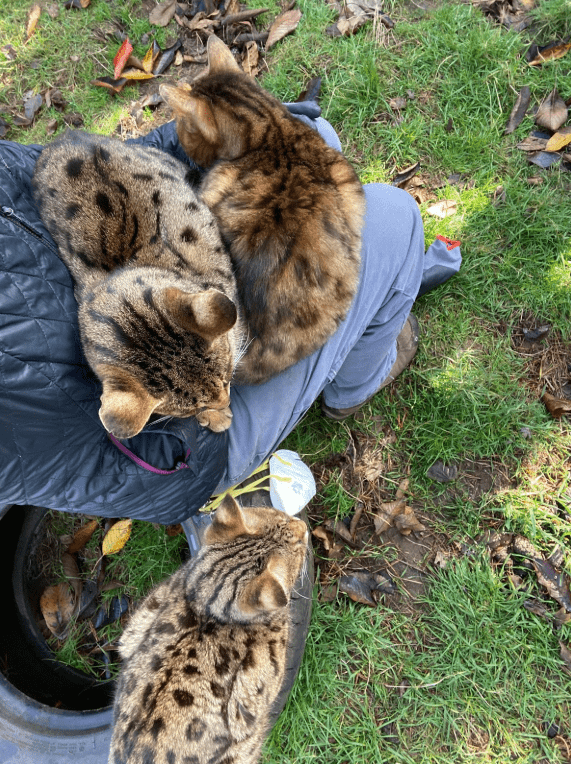
- Small cats “helping” with enclosure cleaning
-
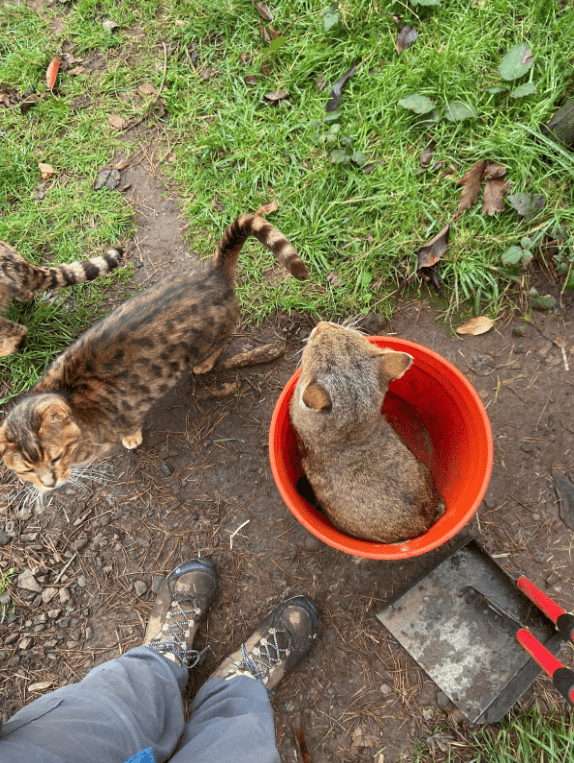
- More helpers 🙂
Post Lunch
Tasks after lunch are where there is the most variety from day to day. Some days are when cleaning enclosures of different perimeters and providing new enrichment for those cats will be done. On those days, interns will usually help come up with a creative enrichment idea and prepare it for each cat that will have an enclosure cleaned. This could be anything from scent enrichment to sound enrichment to play enrichment and everything in between. Cardboard boxes with some type of leaf/packing paper filling and scents are one of the favorites among the cats. For medium and big cats, interns and keepers clean together and interns are taught safety procedures for cleaning. Cat’s water buckets are scrubbed and filled, fresh bedding is placed inside their den boxes, and scat is cleaned from their outdoor enclosure sections. Once this is completed, the enrichment will be added to the enclosure, and keepers and interns will observe how the cats interact with it.
The sanctuary is also home to two pigs, two cows, two donkeys, and two roosters, and this time is also a good time for an intern or keeper to clean their enclosures as well. Similarly to the cats, waters are refreshed, bedding is cleaned out and replaced, and yard poop is cleaned.
This post lunch time is also sometimes allocated for the interns to work on their internship projects. Each intern comes up with ideas for a project they would like to do and discuss potential plans with keepers. These are either an enrichment project or a behavior project for the cats, and it varies from person to person what they prefer to do. Some interns will have projects where they build more complex and long term usable enrichment and can be made for general use of all cats, or focused for big, medium, or small cat usage. They can also do a behavior project where they observe a cat or groups of cats for different kinds of behavior analysis.
My intern project is a behavioral research project that is looking at differences in behavior and daily activity of servals housed by themselves compared to servals housed together. I use trail cameras in enclosures to help with this research so I have three cameras set up at a time, so a large part of my daily activities have started to include checking the positioning of the cameras and the battery level and SD card storage. Once an SD card fills up, I switch it out and begin looking through the photo and video footage to look at different behaviors and how often the different cats are active.
It has been a really interesting experience seeing the behaviors of the cats when keepers and interns are not present as well since the camera footage has been capturing 24 hours a day. There is also a wide variety of different projects interns can do with behavior as well. These projects have a variety of research focus and differ with each cat species and often vary from project to project. The project work or cleaning and upkeep tasks around the sanctuary will go until it is time to start closing preparations for the end of the day.
-
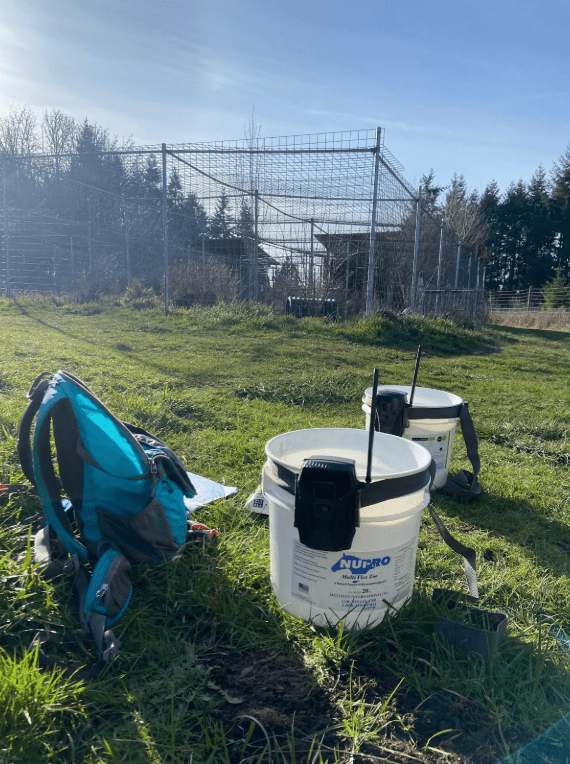
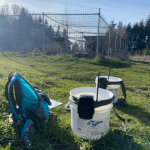
- Trail cameras being prepared for behavior research
-
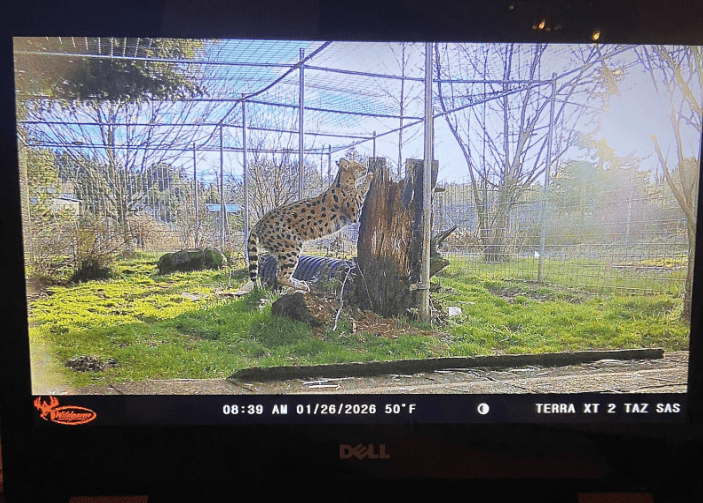
- Trail camera footage of the serval Taz scratching a log in his enclosure
Closing Tasks
Closing starts with preparing evening medications for cats that need it and preparing snacks for all of the other cats that don't have medications. Interns prepare these for each of the cats in the perimeters they were feeding cats in for the morning diets, and learn over time which medications cats get in the morning, which cats get more in the evening, and how each medication is placed in or on a meat piece so that a cat will eat it all. A keeper and intern then go to each cat in their perimeters for the day and distribute out their medications and snacks before returning to the food preparation area. This snack time is when all cats are accounted for and locks are checked. Interns once again practice their skills in identifying normal vs. abnormal behavior and a quick visual wellness check of each of the cats, then discuss what they see with the keeper working with them.
Once we both return to food preparation, all of the final dishes will be done for the night and floor and counters will be cleaned and sanitized. Keepers and interns will discuss any unusual behaviors or anything noteworthy about any of the cats seen during the snack and medication rounds and prepare notes as needed so there is record of anything worth noting so keepers and interns that have shifts on other days will be aware of anything going on with any of the cat’s health or behavior. Once all of the cleaning is complete and the livestock have all been fed, an intern’s day is done!
It is a busy everyday schedule, but it is fulfilling work made all the better by spending the day around all of the incredible cats at the sanctuary.
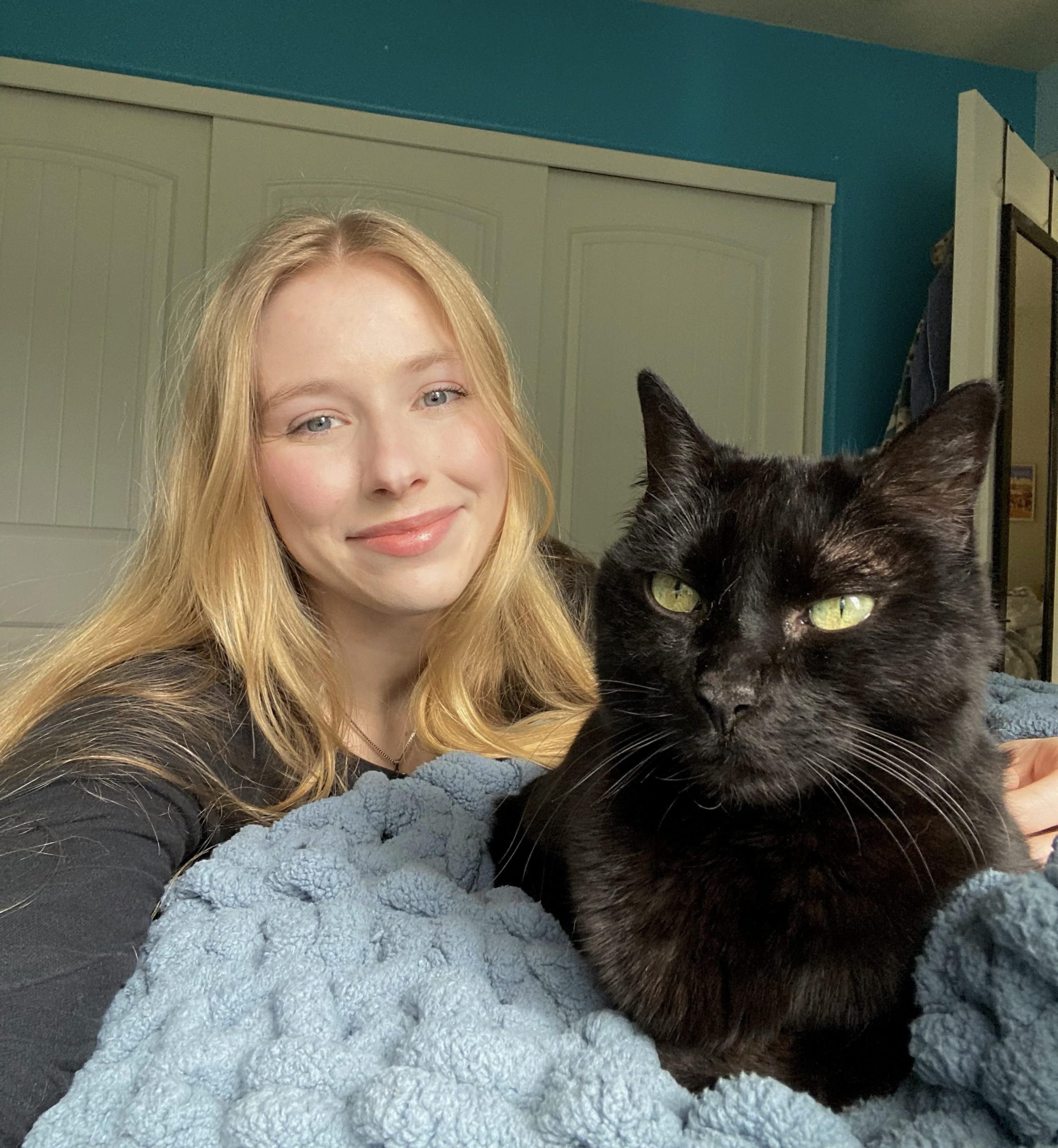 The Author, Caileigh Flowers
I have had a passion for wildlife and ecological conservation as long as I can remember and pursued a degree in Wildlife and Conservation Sciences at Oregon State University. There, I gained the opportunity to participate in wild cat research which grew my existing love for these incredible animals. I continued gaining wildlife experience through conducting research and aiding in rehabilitation before coming to Wildcat Ridge. I am happy to be able to continue advocating for wild cat/wildlife welfare and conservation, and doing my part in making the world a better place for animals.
At home I have two cats, Saffron and Loki, and a dog, Freya, and have grown to love all of the cats at the sanctuary, although Felix the eurasian lynx and Hunter the serval have grown to be favorites of mine during my time here.